




 廣告
廣告





















































首頁 > automotive-testing > 正文
TRI unveils latest automated research vehicle based on the Lexus LS 600hL
2019-09-02 23:20:43· 作者:RACHEL EVANS

The Toyota Research Institute (TRI) has revealed its next-generation automated research vehicle, Platform 3.0, which is built on a Lexus LS 600hL.
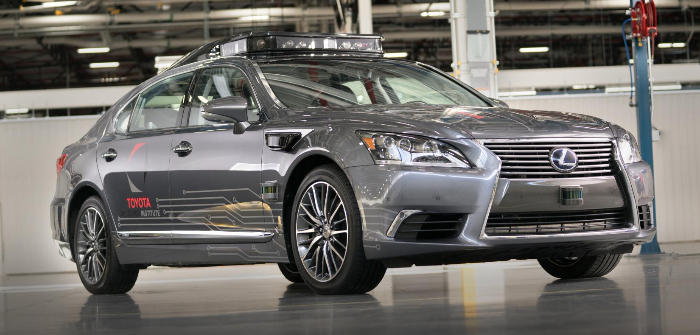
The Toyota Research Institute (TRI) has revealed its next-generation automated research vehicle, Platform 3.0, which is built on a Lexus LS 600hL.
Experimentation at TRI has transitioned to focus on the development of a more defined sensor configuration and creation of a technology package with a level of performance that helps catapult proficiency in understanding the world around the car.
“Our team has once again rapidly advanced our automated vehicle research capabilities. To elevate our test platform to a new level, we tapped Toyota’s design and engineering expertise to create an all-new test platform that has the potential to be a benchmark in function and style,” said Dr Gill Pratt, TRI CEO and Toyota Motor Corporation (TMC) fellow.
Platform 3.0 is equipped with a raft of sensors and is therefore extremely perceptive. The Luminar lidar system for example, with a 200m range, which on TRI’s previous test platform had only tracked the forward direction, now covers the vehicle’s complete 360° perimeter. This is enabled by four high-resolution lidar scanning heads, which precisely detect objects in the environment including notoriously difficult-to-see dark objects.
Shorter-range lidar sensors are positioned low on all four sides of the vehicle – one in each front quarter panel and one each on the front and rear bumpers. These can detect low-level and smaller objects near the car like children and debris in the roadway. The new platform remains flexible for incorporating future breakthrough technology as it becomes available.
TRI has worked closely with CALTY Design Research in Ann Arbor, Michigan, and engineers at Toyota Motor North America Research and Development (TMNA R&D) to compact and conceal the sensors and cameras.
The vehicle’s computational architecture for operating the automated vehicle components, which previously consumed nearly all trunk space, has also been consolidated. The electronics infrastructure and wiring are condensed into a small box.


 廣告
廣告 編輯推薦

最新資訊
-
聯(lián)合國法規(guī)R60對兩輪車操縱件與指示裝置的
2026-03-04 12:08
-
標準立項|《汽車異種材料鉚接接頭拉伸性能
2026-03-04 11:40
-
“汽車大角度座椅 第1部分:通用要求”將有
2026-03-04 11:39
-
“汽車大角度座椅 第2部分:可靠性要求”將
2026-03-04 11:39
-
電池耐久評價開始從“電池單體性能指標”轉
2026-03-04 11:38
